


1. Project Overview
Project Title: Ahaar Mitra – Where kindness meets hunger
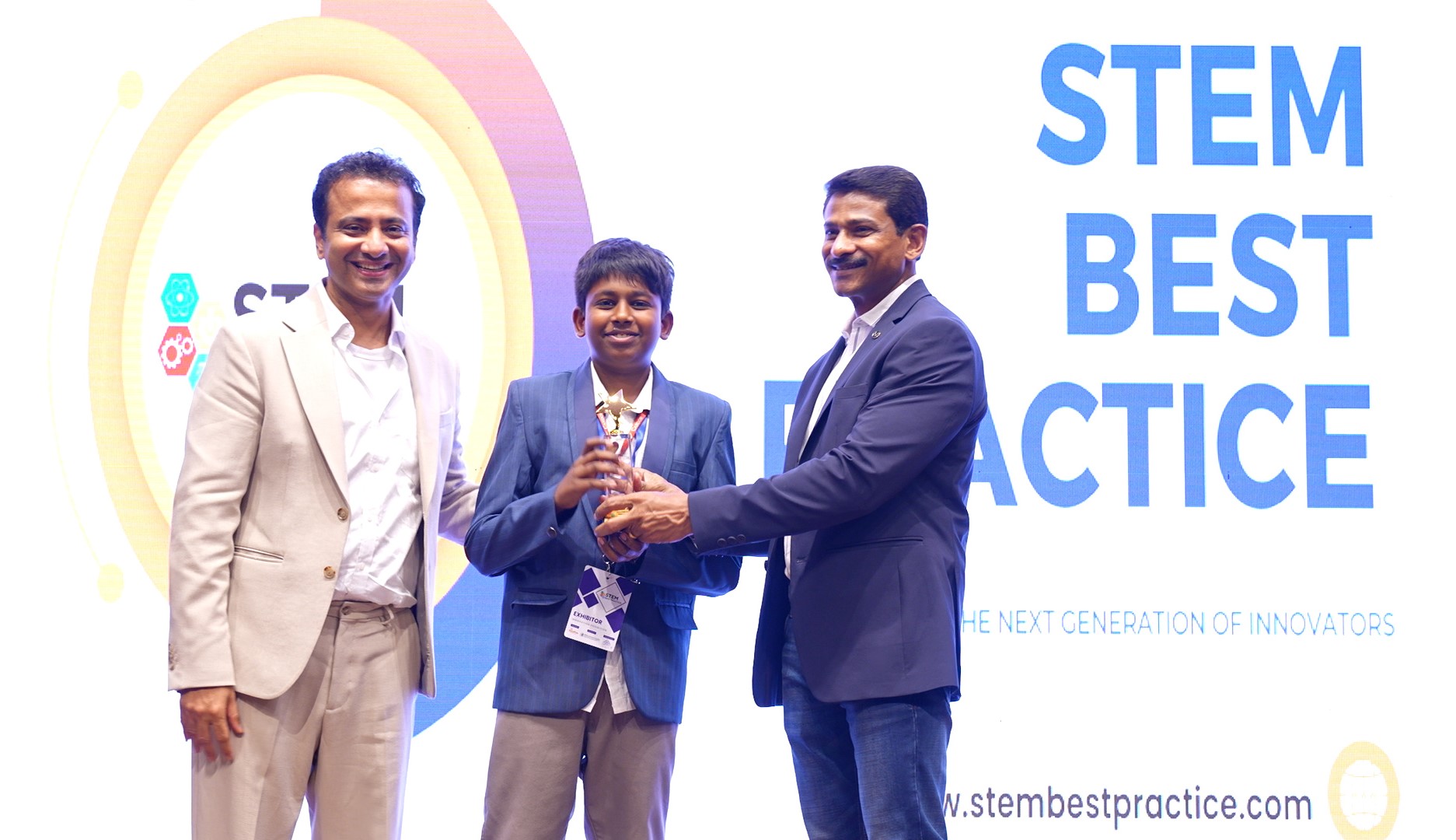
Student: Arnav Prasanna, Grade 7
School: Candor International School, Bengaluru
Ahaar Mitra is a smart, technology-driven project that connects surplus food sources with people in need using an IoT-enabled fridge. Designed by a 7th-grade student, this project demonstrates how young minds can build scalable, real-world solutions to solve critical social challenges. Ahaar Mitra functions as a bridge between restaurants that often have excess food and low-income communities that frequently go hungry. It does so through intelligent sensing, status indication, and real-time alerts to ensure freshness and timely access.
2. Abstract
 India is a country of contrasts. Despite being the second-largest food producer in the world, it continues to struggle with one of the highest levels of hunger and malnutrition.1 The idea behind Ahaar Mitra was born from this contrast — to leverage technology in order to reduce food wastage and ensure that nutritious food reaches those who need it most. Ahaar Mitra is an IoT-powered smart fridge that monitors food presence and spoilage using sensors and communicates this status in real-time to donors and recipients. By automating food freshness detection and combining it with instant communication, this system enables a structured, safe, and sustainable method to feed the undernourished while addressing environmental waste.
3. Introduction
In India, over 189.2 million people are undernourished, making it home to the largest number of hungry individuals in the world. According to the Global Hunger Index 2021, India ranks 101st out of 116 countries, with a score of 27.5 — indicating a serious hunger level.1 At the same time, about 68.7 million tons of food is wasted annually, 11.9 million tons of which comes from the food service sector.1 Restaurants often overprepare food to meet uncertain demand, and without an effective redistribution mechanism, excess food is discarded.
These numbers highlight a systemic flaw — not in production, but in distribution. Many communities go without food because they lack access, awareness, or proximity to food sources. On the other hand, many restaurants and food vendors are unable to redistribute surplus food due to safety concerns, lack of infrastructure, or awareness. This is where Ahaar Mitra comes in — a tech-enabled solution to bridge this gap, and provide equitable food access through automation and community collaboration.
4. Research & Background
In designing Ahaar Mitra, I conducted research on the causes and effects of food wastage and hunger, especially in urban settings. I learned that on the supply side, restaurants are often hesitant to donate food due to lack of cold storage, and no awareness about nearby NGOs or donation platforms. On the demand side, people in low-income neighborhoods and orphanages may not know when and food is available. In addition, there is a social stigma around receiving “leftover” food. These insights led me to design Ahaar Mitra.
The project also draws inspiration from the UN Sustainable Development Goal 2: Zero Hunger and UN Sustainable Development Goal 12: Responsible Consumption and Production.2
 I was inspired to build this project because of 2 things:
1, The onion bank project, which is Iot solution to a problem of high amounts of onions going to waste after being harvested. In India over 26 millions tons of onions are grown, but almost 40% of the onions go to waste, which is enough for over 50 million people. The problem was that farmers relied on smell to check if the onions were fresh, but by the time they found out the onions were spoiled it was to late. To combat this problem, Kalayni, the daughter of a farmers who was losing up to 50% of this harvest because of this problem, with only 300,000 rupees in funding, going to Lasalgaon, Asia’s biggest onion market with a built solution. She created Godaam Sense which, like my project Ahaar Mitra trackes the temperature and gas emitted by the onions to send alerts when only 1% of the harvest starts to rot.3
2, The food bank. The food bank by Issa Fathima is a solution to slove the problem of food wastage and no way to distribute the food efficiently, but the project is no longer active. This inspired me to build Ahaar Mitra.4
5. Methodology
The methodology followed a structured, iterative approach to develop a working prototype of a smart community fridge. My goal was to use low-cost IoT components and materials that could be replicated at scale.
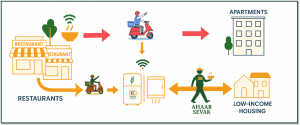
1. Conceptualization: I first envisioned a basic food drop-off point. However, I soon realized that freshness and hygiene were critical. So, I decided to embed sensors to check food presence and condition, and notify relevant parties in the chain.
2. Components used:
– ESP32 Microcontroller for freshness logic
– Ultrasonic sensor to detect presence of food items inside the fridge
– MQ2 gas sensor to detect food spoilage based on emission of gases like methane or ammonia
– OLED display to show status messages like “Fresh Food Available” or “Food Spoiled”
– Basic power supply and jumper wires for circuit completion
3. Assembly: I created the housing using a cardboard fridge model. The sensors were connected to the ESP32 Microcontroller board and programmed to relay signals based on thresholds for distance (food presence) and gas concentration (spoilage). The OLED were programmed to respond accordingly.
4. Software Logic: The Arduino sketch checks food presence through the ultrasonic sensor. If food is detected, it checks the gas levels. Based on these inputs, it triggers the correct message on the display.
Next, I built a more refined model which used foamboard as the box. For this model I used both a Hot Box and Cold Box so that different types of food can be stored at different temperatures, this allows the food to stay fresh for longer periods of time.
- Components Used:
Hot Box:
- ESP32 Microcontroller for the freshness logic.
- Ultrasonic Sensor to detect the presence of food items inside the fridge.
- MQ-136 H2S Gas Sensor which can accurately detects the presence of Hydrogen Sulfide which is emitted by stale food.
- DHT11 Temperature Sensor which is used to measure the temperature in the Hot Box to see if it is at the correct temperature range.
- 0.96-inch OLED Screen to display the status messages like “FRESH” or “STALE” .
- Basic power supply and jumper wires to connect the components together.
Cold Box:
- ESP32 Microcontroller for the freshness logic.
- Ultrasonic Sensor to detect the presence of food items inside the fridge.
- MQ-2 Gas Sensor to detect if any gasses are coming out of the food
- DHT11 Temperature Sensor which is used to measure the temperature in the Hot Box to see if it is at the correct temperature range.
- 0.96-inch OLED Screen to display the status messages like “FRESH” or “STALE” .
- Basic power supply and jumper wires to connect the components together.
2. Assembly: I created the housing using a foamboard. The sensors were connected to the ESP32 Microcontroller board and programmed to relay signals based on food presence and gas concentration (spoilage). The OLED were programmed to respond accordingly.
6. Project Results
Testing both the prototype and the newer model involved multiple rounds of inserting different types of food (fresh, semi-spoiled, and spoiled) to measure sensor accuracy. The gas sensor showed high sensitivity to pungent foods like onions, but gave consistent readings after calibration.
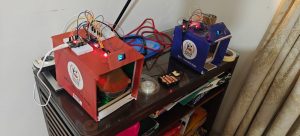
The OLED Screen showed the correct message in the expected sequence:
– No food: “No Food” on OLED
– Fresh food: “Fresh Food”
– Spoiled food: “Stale”
Challenges included false positives when food was tightly sealed or packed in containers. I resolved this by adjusting the position of the gas sensor to be closer to the container lid.
This trial confirmed that real-time status reporting could be automated and displayed clearly, even to non-technical users. Teachers and peers who reviewed the system found the concept practical, intuitive, and socially meaningful.
7. Conclusion
Ahaar Mitra demonstrates that even a simple, low-cost, sensor-driven prototype can provide a robust solution to major societal challenges like hunger and food waste. By automating food collection, freshness detection, and notification, it removes the challenges in food redistribution efforts. The prototype aligns with sustainability in three ways — environmentally (reduced waste), socially (feeding the needy), and economically (low-cost tech).
The potential of the idea lies not just in technical execution, but in its replicability. Schools, community centers, and local municipalities can deploy such a system easily, fostering civic responsibility and compassion. Future improvements could include a mobile dashboard for live monitoring and analytics. This project gives me the confidence to believe that age is no barrier to impact.
8. Future Potential
The next phase involves building a full-scale fridge prototype using a real refrigerator and integrated sensors. I plan to deploy this model in my school to handle leftover food from the canteen and distribute it to orphanages nearby.
Future improvements include:
– Adding solar power for energy independence
– Creating a web dashboard for admins and NGOs to monitor status remotely
– Partnering with delivery agents to solve last-mile logistics
Scaling this model across Bengaluru could drastically reduce food waste and feed thousands. Partnering with NGOs, CSR donors, and the local government will help achieve this. One Ahaar Mitra unit, placed in a key location, could save over 1000+ meals a month. With just 100 such units, we could rescue close to 100,000 meals monthly — enough to feed thousands.
In the long run, Ahaar Mitra can grow into a citywide network of smart food banks, powered by sensors, monitored in real-time, and united by purpose.
9. References
https://sdgs.un.org/goals
https://nasscom.in/emerge50-2023/winners/godaam-innovations.html
https://thebetterindia.com/157671/fridge-donation-bengaluru-public-refrigerator-issa-fathima/
10. About the Author
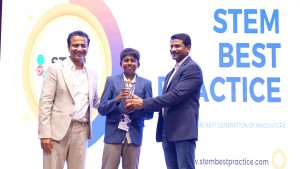 Arnav Prasanna is a 7th-grade student at Candor International School, Bengaluru. Passionate about technology and he enjoys building projects that make a difference. He believes in using innovation to solve real-world problems and is especially interested in areas like sustainability, IoT, and community impact. Outside of school, he loves to tinker with electronics and read about tech.