



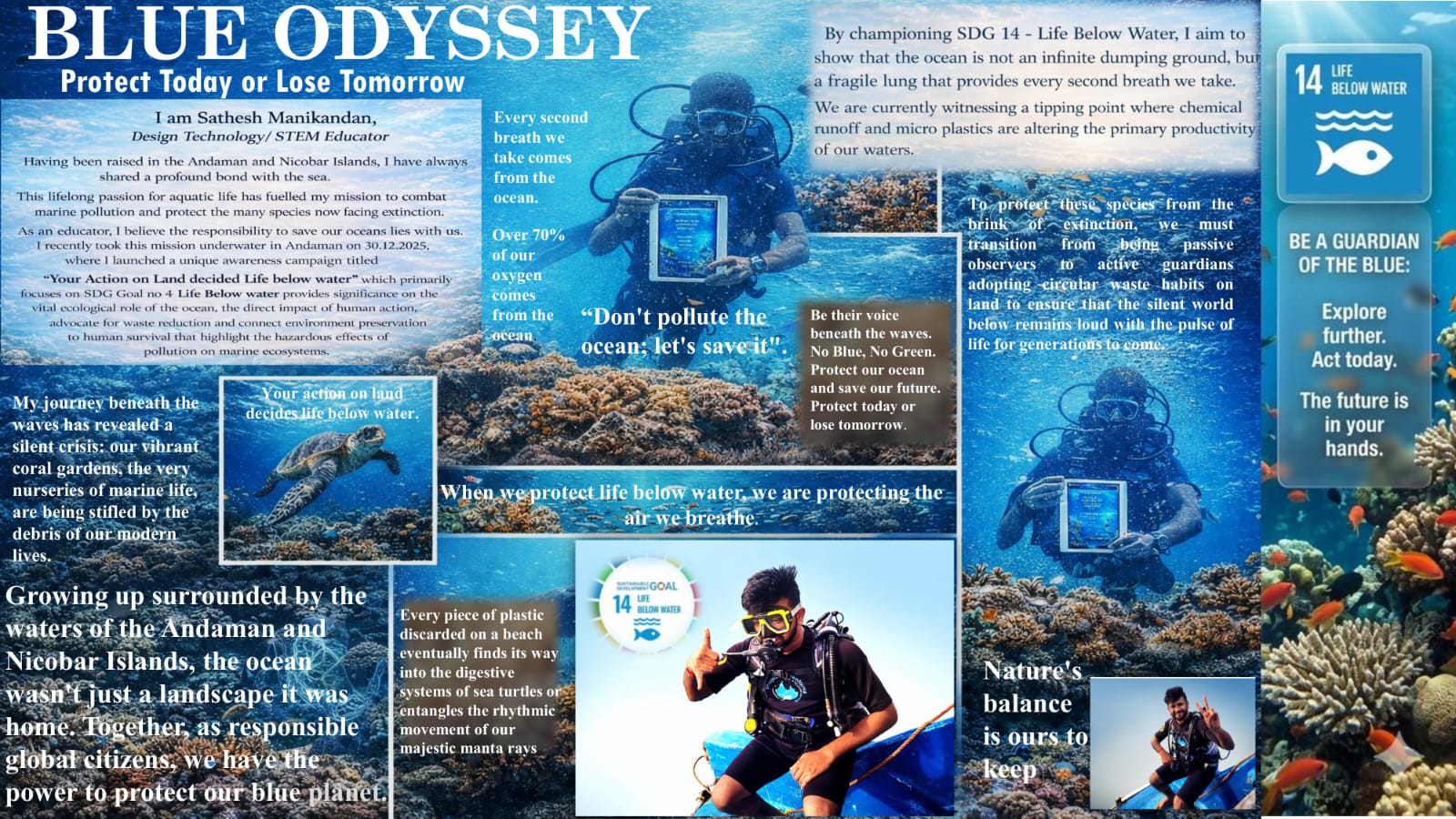
Sathesh M, a teacher of design technology and STEM from the Andaman and Nicobar
Islands, has started a new campaign to raise awareness about the need to protect the ocean. The project “Your Action on Land Decides Life Below Water” is based on Sustainable Development Goal 14, which is about life below water. It talks about how oceans are important to the environment and how what people do affects marine ecosystems.
He grew up in the peaceful Andaman and Nicobar Islands, and he says the sea has always
been more than just a pretty sight for him. He had a strong and natural connection to the
ocean because he grew up in the archipelago’s vast blue waters. The sea is more than just a physical feature for island communities; it is also a source of culture, identity, and food. He has watched tides, coral formations, and the many types of marine life that live below the surface since he was a child. These early experiences helped him see the ocean as a living system. The colourful reefs, the different kinds of marine life and the rhythmic sound of the waves sparked a lifelong interest that later turned into a strong commitment to protecting the environment.
How did his childhood experiences by the sea shape how he thinks about marine
ecosystems?
 When he started scuba diving, he learned more about the world around him. He saw a
colourful underwater world of corals, schools of shimmering fish, graceful sea turtles, and
many other marine species that made up complex ecological networks. Diving taught him not just how to do things, but also how complicated and strong nature is.
He says that nature is the best teacher when you’re underwater. Every living thing,
movement, and structure shows how things have changed and evolved over millions of years.
This natural intelligence often leads to new ideas, especially in areas where scientists study
biological systems to come up with technologies that are good for the environment.
For example, fish with streamlined bodies have led to the development of fast marine
vehicles and underwater robots. Architects and engineers have learned from the complicated structures of coral reefs how to build strong but long-lasting buildings. Researchers have also looked into how marine animals work together to make navigation systems and collaborative technologies better. But he also started to see changes in the underwater world he loved that worried him. Coral reefs in a few places looked like they were stressed out and bleaching. Sometimes marine animals got stuck in old fishing nets, and plastic trash floated between
coral branches.
What kinds of environmental problems did he see while scuba diving?
Seeing these problems made him even more determined to let people know how fragile
marine ecosystems are. He felt at home in the ocean because he grew up near the waters of the Andaman and Nicobar Islands. This strong personal connection drove him to start a mission to cut down on pollution in the ocean and protect species that are becoming more and more endangered because of human carelessness. He said that the campaign was meant to get people to rethink how they interact with nature and take responsibility for keeping the oceans safe. The campaign “Your Action on Land
Decides Life Below Water” shows how closely what people do on land affects the health of
marine ecosystems. Trash thrown away in cities, towns, and along the coast often ends up in the ocean after going through rivers and drainage systems. Because of this, even small acts of littering can hurt marine life in big ways.
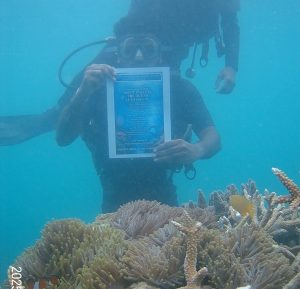
He did an underwater awareness activity in the Andaman waters on December 30, 2025.
An underwater campaign to raise awareness about protecting the ocean?
Coral reefs are very important for keeping the ocean’s biodiversity. They provide food, shelter, and breeding grounds for thousands of species of fish and invertebrates. Healthy reefs also keep coastlines safe by making waves and storms less powerful. But these ecosystems are now under more stress than ever before. Plastic pollution is still one of the most obvious and dangerous threats. He said, “Every piece of plastic that is thrown away on land will eventually end up in the ocean”. “Sea turtles can eat these plastics and manta rays can get stuck in them and move more gracefully”.
Pollution from plastic hurts more than just big sea creatures. Plastics break down into tiny
pieces called microplastics over time. These pieces get into the marine food chain. Small
organisms eat these particles, which then move up the food chain and affect fish, seabirds and even people. The campaign strongly stresses the importance of SDG 14, which is a global goal set by the United Nations to protect and use oceans and marine resources in a way that is good for the environment. He thinks that getting people to know about this goal is important for encouraging people to be responsible with the environment in the long term. He said, “The ocean is not a place where you can throw things away”. “It is the planet’s weak life-support system.”
Scientists have discovered that oceans take in a lot of the carbon dioxide that is released into the air and make almost half of the oxygen that people breathe. For this reason, oceans are very important for keeping the climate stable and supporting food systems around the world.
Marine ecosystems are still in danger from overfishing, habitat destruction, pollution, and
climate change, even though they are very important. Coral bleaching is caused by rising
ocean temperatures, and chemical runoff from farming and industry throws off the delicate
balance of marine life. He says that the world may be getting close to a tipping point where
all of these pressures could make the ocean much less productive. Even though these
problems exist, he still believes that change is possible if people are aware of them and work together. He thinks that people and communities can make a real difference in the
environment by taking action on a regular basis.
He tells people to not only learn about sustainability but also to put it into practice. Cutting
down on plastic use, throwing away trash properly, and helping to clean up the coast are all
easy things you can do to keep pollution out of the oceans.
Schools and other places of learning are also very important for teaching young people about the environment. By including ocean conservation themes in his lessons, he gets his students to think about how new ideas, technology, and caring for the environment are all related.
When kids learn how important marine ecosystems are, they often become passionate
advocates for protecting the environment in their communities. Communities can help keep the oceans healthy and protect marine biodiversity for future generations by using circular waste practices, using less single-use plastics, promoting sustainable products, and protecting coastal ecosystems. In the end, his job is more than just protecting marine life. It wants to create a culture around the world that respects nature. He said,”The ocean has helped people for generations.”Now we have to take care of it”.
How does his campaign get people and communities to take care of the ocean?
His campaign gets people and groups to take care of the ocean by making them aware of how their actions every day affect marine life. He uses the campaign “Your Action on Land Decides Life Below Water” to show how what we do on land affects the health of the ocean.
He says that trash that is thrown on the streets, in villages, and along the coast often goes
through rivers and drainage systems before it gets to the sea. This means that even small acts of littering can hurt marine ecosystems.
The campaign also encourages people to do simple but important things that help cut down
on pollution. He tells people to use less plastic, throw away trash the right way, and help
clean up the coast. The campaign shows that people and communities working together can greatly cut down on the amount of pollution that gets into the ocean by encouraging these actions.
His plan is heavily based on education. He teaches young students about the importance of
protecting marine ecosystems by including ocean conservation themes in their lessons. When students learn about how important oceans and marine biodiversity are, they often become active supporters of protecting the environment in their own communities.
His campaign encourages people to stop being passive observers of the ocean and become
responsible guardians of it. This will protect marine life and ecosystems for future
generations through awareness, education, and community involvement.