



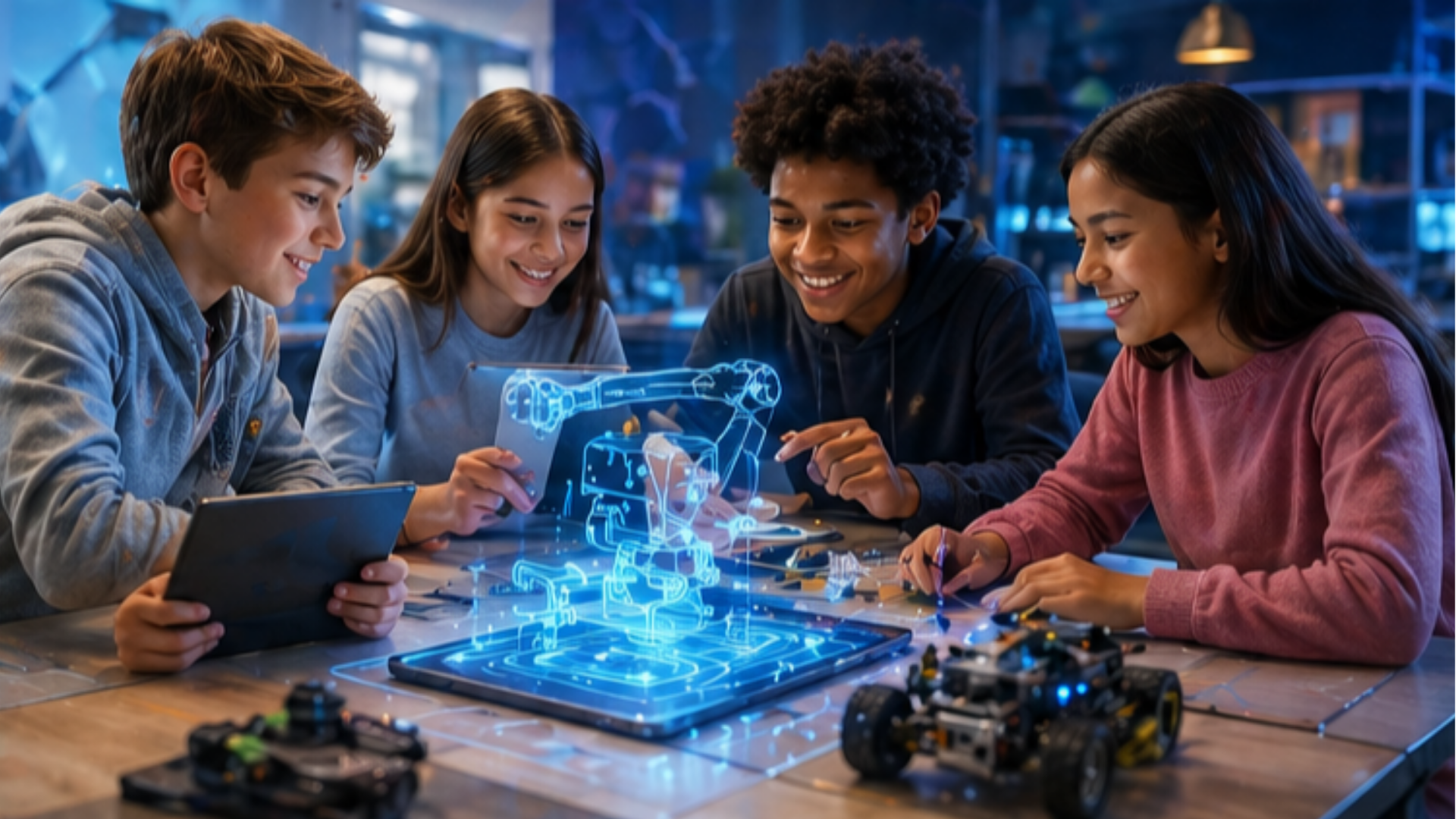
The landscape of education is evolving rapidly, driven by technological advancements and changing learner expectations. Traditional methods of instruction—centered on passive listening and standardized delivery—are increasingly being replaced by dynamic, student-centered approaches. Among these, gamification and interactive learning have emerged as powerful strategies that not only enhance engagement but also improve learning outcomes.
Gamification integrates elements commonly found in games—such as rewards, challenges, and progression systems—into educational contexts. Interactive learning, on the other hand, emphasizes active participation, encouraging students to engage directly with content through exploration, collaboration, and problem-solving. Together, these approaches redefine learning as an experience rather than a routine task.
Understanding Gamification in Education
Gamification involves the application of game-design principles in non-game environments to motivate and engage learners. In educational settings, it often includes features such as points, badges, leaderboards, and structured challenges. These elements create a sense of achievement and progression, making the learning process more compelling.
However, effective gamification extends beyond superficial rewards. It requires thoughtful alignment with learning objectives, ensuring that each game element reinforces meaningful educational outcomes. When designed well, gamification transforms lessons into structured journeys where students progress through levels of understanding, much like advancing through stages in a game.
The Role of Interactive Learning
Interactive learning complements gamification by shifting the focus from passive reception to active engagement. It encourages learners to participate, experiment, and apply knowledge in real time. This approach is particularly valuable in fostering deeper understanding, as students are not merely absorbing information but actively constructing it.
Examples of interactive learning include virtual simulations, collaborative projects, real-time assessments, and immersive technologies such as augmented and virtual reality. These methods enable students to experience concepts firsthand, making abstract ideas more tangible and easier to comprehend.
Psychological Foundations of Gamified Learning
 The effectiveness of gamification is rooted in well-established psychological principles. Game elements are designed to tap into intrinsic and extrinsic motivation, creating an environment where learners feel both challenged and rewarded.
One of the key drivers is the brain’s reward system. Achievements and progress trigger the release of dopamine, reinforcing positive behavior and encouraging continued engagement. Immediate feedback, another essential component, allows learners to identify mistakes and make corrections quickly, leading to improved retention and mastery.
Additionally, gamification provides a safe environment for failure. Unlike traditional assessment systems, where mistakes can carry significant consequences, gamified platforms allow students to retry tasks and learn through iteration. This reduces anxiety and promotes a growth mindset.
Benefits of Gamification and Interactive Learning
Enhanced Engagement
Gamified and interactive approaches capture students’ attention more effectively than conventional teaching methods. The inclusion of challenges and rewards sustains interest and encourages active participation.
Improved Learning Outcomes
Research indicates that students are more likely to retain information when they are actively engaged in the learning process. Gamification, combined with interactive elements, enhances both comprehension and long-term retention.
Development of Essential Skills
Beyond academic knowledge, these approaches foster critical skills such as problem-solving, collaboration, and decision-making. Students learn to navigate challenges, think strategically, and work effectively in teams.
Personalized Learning Experiences
Many gamified platforms incorporate adaptive technologies that adjust content based on individual performance. This ensures that learners receive instruction tailored to their specific needs and pace.
Encouragement of Lifelong Learning
By making learning enjoyable and meaningful, gamification cultivates curiosity and intrinsic motivation. Students are more likely to pursue knowledge independently, extending learning beyond the classroom.

Applications Across Educational Contexts
Gamification and interactive learning are being implemented across various levels of education and training.
In school education, teachers are incorporating game-based quizzes, digital rewards, and interactive activities to make subjects more engaging. In higher education, simulations and scenario-based learning are used to bridge the gap between theory and practice. Corporate training programs have also adopted gamification to enhance employee engagement and knowledge retention.
In STEM education, these approaches are particularly impactful. Complex concepts in science, technology, engineering, and mathematics can be simplified through hands-on challenges and interactive simulations, making them more accessible to learners.
Technology as a Catalyst
 The rise of digital technologies has played a crucial role in enabling gamification and interactive learning. Learning Management Systems now include gamified features, while mobile applications provide flexible, on-the-go learning opportunities. Artificial intelligence further enhances personalization by analyzing learner behavior and adapting content accordingly.
Immersive technologies such as augmented reality and virtual reality are pushing the boundaries of interactive learning, allowing students to explore environments and scenarios that would otherwise be inaccessible.
Challenges and Considerations
Despite its advantages, gamification is not without limitations. One of the primary concerns is the overemphasis on rewards, which can shift focus away from intrinsic motivation. If learners become too reliant on external incentives, the educational value may diminish.
Additionally, poorly designed gamification can result in superficial engagement, where students participate in activities without achieving meaningful learning outcomes. Accessibility is another important consideration, as not all learners have equal access to digital tools and resources.
Finally, the successful implementation of gamification requires adequate training for educators. Without a clear understanding of design principles and objectives, the potential benefits may not be fully realized.
Best Practices for Implementation
To ensure effectiveness, educators should adopt a strategic approach to gamification and interactive learning. Game elements must be aligned with clear learning objectives, and the focus should remain on meaningful engagement rather than superficial rewards.
Encouraging collaboration, rather than excessive competition, can create a more inclusive learning environment. Continuous monitoring and the use of data analytics can help educators assess progress and refine their strategies. Flexibility and adaptability are essential, as different learners respond to different approaches.
The Future of Gamification in Education

As technology continues to advance, the role of gamification in education is expected to expand further. Artificial intelligence will enable more sophisticated personalization, creating learning experiences tailored to individual needs. Immersive environments powered by AR and VR will provide experiential learning opportunities that go beyond traditional classrooms.
The concept of the metaverse is also gaining attention, with the potential to create fully interactive virtual learning spaces where students can collaborate globally. Data-driven insights will allow educators to make more informed decisions, optimizing both teaching strategies and learning outcomes.
Conclusion
Gamification and interactive learning represent a significant shift in the way education is delivered and experienced. By combining the motivational aspects of game design with the engagement of active participation, these approaches address many of the limitations of traditional teaching methods.
However, their success depends on thoughtful implementation and a clear focus on educational objectives. When used effectively, gamification not only enhances engagement but also fosters deeper understanding, critical thinking, and a lifelong passion for learning.
As education continues to evolve, gamification and interactive learning will play a central role in preparing learners to navigate an increasingly complex and dynamic world.
References
Buckley, P., & Doyle, E. (2016). Gamification and student motivation. Interactive Learning Environments.
Deterding, S., Dixon, D., Khaled, R., & Nacke, L. (2011). From game design elements to gamefulness.
Hamari, J., Koivisto, J., & Sarsa, H. (2014). Does gamification work?
Kapp, K. M. (2012). The Gamification of Learning and Instruction.
Gee, J. P. (2003). What Video Games Have to Teach Us About Learning and Literacy.