


Featuring FLYSYM by Kitspire India Pvt. Ltd.
 Schools today are increasingly focused on bridging the gap between classroom learning and real-world application. As technology reshapes the future, students need more than theory—they need hands-on, engaging experiences that build critical thinking and confidence.
Simulator Pilot Programs are emerging as an innovative solution, using aviation-based simulation to make STEM learning immersive and practical. In India, initiatives like FLYSYM by Kitspire India Pvt. Ltd. are leading this shift, bringing aviation and aerospace concepts into schools in an accessible and impactful way.
This article explores how such programs are redefining learning and preparing students for future-ready careers.
What is a Simulator Pilot Program?
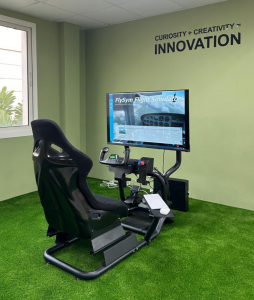
A Simulator Pilot Program is an educational approach that uses flight simulation technology to introduce students to aviation while strengthening STEM learning. Through realistic simulators, students experience aircraft operations such as takeoff, navigation, and landing in a safe, controlled environment—giving them a firsthand sense of what it’s like to be a pilot.
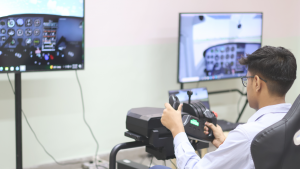
Programs like FLYSYM by Kitspire India Pvt. Ltd. enhance this experience with structured workshops covering
- Principles of flight and aerodynamics
- Aircraft controls and cockpit instruments
- Navigation and weather interpretation
- Real-world aviation scenarios
They also expose students to aviation careers and help them explore essential aviation skills early on.
Key Benefits for Students
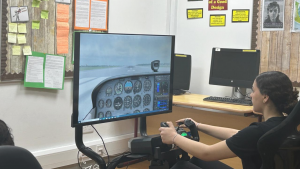
Simulator Pilot Programs offer a wide range of benefits that extend beyond academics. They shape how students think, learn, and approach challenges.
Experiential Learning
Students actively participate in their learning journey. Instead of passively absorbing information, they engage with real-time scenarios, which significantly improves understanding and retention.
Critical Thinking and Problem-Solving
Flight simulation requires constant decision-making. Students must interpret instrument readings, adjust controls, and respond to changing conditions. This builds analytical thinking and adaptability.
Confidence Building
Successfully completing a simulated flight instills a strong sense of achievement. Students gain confidence in their abilities and become more willing to take on new challenges.
Decision-Making Skills
In aviation, every decision matters. Simulation environments teach students to evaluate situations quickly and make informed choices—skills that are valuable in any field.
Teamwork and Collaboration
Many programs, including FLYSYM workshops, incorporate group activities such as flight planning and collaborative missions. Students learn to communicate effectively, share responsibilities, and work toward common goals.
Increased Engagement
The immersive nature of simulation captures students’ attention. It often sparks interest in subjects they previously found difficult or uninteresting, particularly in STEM areas.
STEM Learning Through Simulation
One of the strongest advantages of simulator-based programs is their ability to bring STEM subjects to life.
Physics in Motion
Students directly observe how forces like lift, drag, thrust, and gravity interact. Adjusting speed or altitude provides immediate feedback, reinforcing theoretical concepts.
Mathematics with Real-World Context
Flight planning involves calculations related to speed, distance, time, and direction. Students apply mathematical concepts in practical, meaningful ways.
Technology and Systems Understanding
Modern simulators introduce students to cockpit instruments, navigation systems, and digital interfaces. This exposure builds familiarity with complex technological systems.
Engineering Insights
Students begin to understand how aircraft are designed for efficiency and safety. They explore how different components work together, fostering systems thinking. Programs like FLYSYM are particularly effective because they integrate these elements into structured workshops, ensuring that students not only experience simulation but also understand the underlying concepts.
Career Pathways in Aviation
Aviation education opens the door to a wide array of career opportunities—many of which students may not have previously considered.
Pilot Careers
Simulation provides an early introduction to flying, helping students understand what it takes to pursue aviation professionally.
Aerospace Engineering
Students interested in design and innovation can explore careers in aircraft and spacecraft development.
Air Traffic Control
Simulation highlights the importance of coordination and communication, key aspects of managing airspace.
Aviation Maintenance and Avionics
Understanding aircraft systems can lead to careers in technical maintenance and electronic systems.
Space and Aerospace Research
Aviation often serves as a gateway to broader interests in space exploration and advanced scientific research.
By introducing these possibilities early, programs like FLYSYM help students make informed academic and career choices while building aspiration and direction.
Implementation in Schools
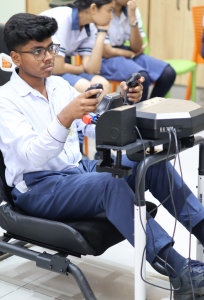
Introducing a Simulator Pilot Program in schools is both practical and impactful, especially with structured solutions like FLYSYM by Kitspire India Pvt. Ltd. designed specifically for educational environments.
Workshop-Based Integration
FLYSYM offers a flexible, school-friendly workshop model that can be seamlessly incorporated into existing academic schedules. Without requiring major curriculum changes, schools can provide students with meaningful exposure to aviation and STEM through short, engaging sessions.
Aviation Labs in Schools
Schools can also establish dedicated aviation labs with compact simulator setups. These can start small and scale over time based on student interest and institutional resources, creating a long-term, sustainable learning ecosystem.
By adopting such programs, schools can deliver high-impact, experiential learning without significant logistical complexity. For school leaders, it reflects a commitment to innovation and future-ready education. For educators, it becomes a powerful tool to inspire curiosity and engagement. For parents, it offers assurance that students are developing practical skills that extend beyond the classroom.